Is solar worth it in Scotland?
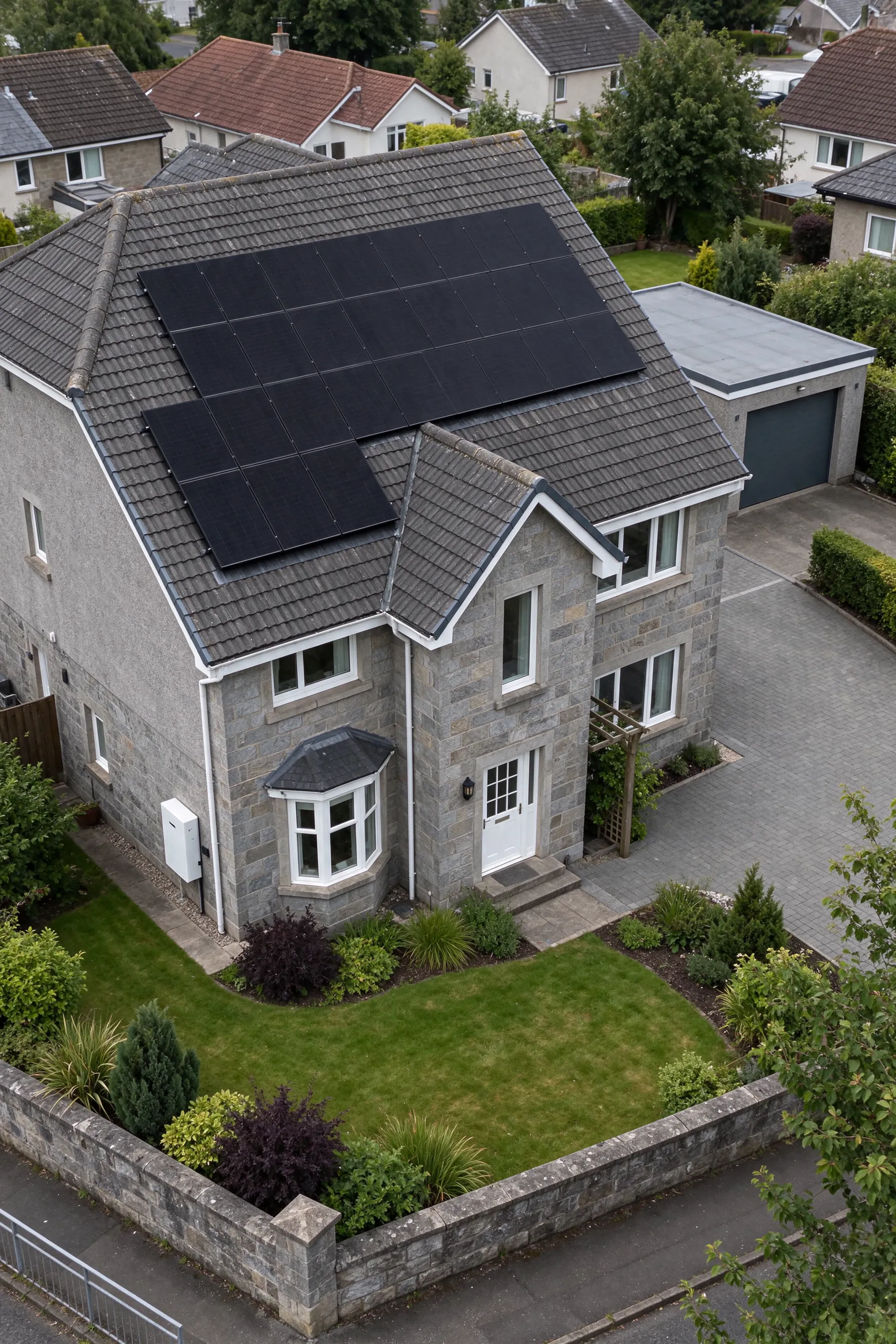
Yes. Solar panels generate electricity year-round in Scotland, including on cloudy days, because modern panels convert diffuse light as well as direct sunlight. Adding a home battery stores daytime surplus for evening use, which is when most Scottish households use most electricity, making the combination worthwhile for homes across Edinburgh and the Lothians.
Get a free quote
Tell us your postcode and we will be in touch.
Get a quote
Survey & design
Install & handover
How much daylight does Scotland get for solar?
Scotland receives between 1,000 and 1,200 hours of sunshine per year, which is lower than southern England but still sufficient for solar generation. The key point is that solar panels do not need bright sunshine — they generate electricity from daylight, including the diffuse light that comes through clouds. On an overcast day, a solar panel still produces 10–25% of its peak output.
In summer, Scotland benefits from very long daylight hours — up to 17 hours of daylight in June and July — which means panels generate for longer each day even if the peak intensity is lower. In winter, daylight drops to around 7 hours, so generation falls significantly. This is why a battery is so important in Scotland: it lets you capture summer surplus and shifts daytime generation to the dark evenings when you need it most.
What orientation and roof pitch work best in Scotland?
South-facing roofs generate the most electricity in Scotland, as they do everywhere in the northern hemisphere. However, east and west-facing roofs still generate around 80% of what a south-facing roof produces, and they have the advantage of spreading generation across the morning and afternoon — which can pair well with a battery.
The ideal roof pitch for solar in Scotland is around 30–40 degrees, which is typical for most British houses. Steeper pitches favour winter generation (when the sun is lower), while shallower pitches favour summer. Most Edinburgh and Lothian roofs are within the useful range.
If your roof is heavily shaded by chimneys, dormers, or neighbouring buildings, generation will be reduced. We map shading at survey stage and can recommend panel placement or micro-inverters that handle partial shade better.
Does a battery make solar worth it in Scotland?
In short, yes. Without a battery, the electricity your panels generate during the day is only available while the sun is shining. If nobody is home, that surplus gets exported to the grid — often at a lower rate than what you pay to buy it back in the evening. A battery closes that gap.
A battery lets you store daytime generation and use it in the evening and overnight. In Scotland, where winter generation is low and evening demand is high, this matters more than in sunnier climates. A well-sized battery can cover most of your evening usage from stored solar, reducing what you buy from the grid at the most expensive times.
We take a battery-first approach: we size your storage alongside your panels so the two work together from the outset, rather than treating the battery as an afterthought.
What about tenements, flats, and conservation areas?
Edinburgh has a large stock of tenement flats and properties within conservation areas or listed-building designations. These need careful handling but are not ruled out. Roof ownership in tenements is often shared, and planning rules can restrict visible alterations to street-facing elevations.
During your survey, we discuss what is practical on your building, including rear-elevation, flat-roof, or ground-floor options. We also advise on the planning and listed-building consent position before you commit to anything.
What about the cost and payback?
The cost of a solar and battery system depends on system size, battery capacity, inverter type, and installation complexity. There is 0% VAT on solar panels and home battery storage until 31 March 2027, which reduces the upfront cost. Interest-free credit up to £30,000 is available, subject to status, which can spread the cost monthly.
Whether solar is "worth it" financially depends on your household consumption, your tariff, and how much of your generation you can use yourself. A battery increases the proportion you use, which improves the economics. We model this at survey stage so you can see the numbers for your specific home.
Looking for more answers? See more answers from Scottish Energy Efficiency.
What else do people ask?
Does Scotland get enough sun for solar panels to work?
How much electricity do solar panels generate in Scotland?
Is solar worth it in Edinburgh specifically?
Do solar panels work in winter in Scotland?
How long do solar panels last in the Scottish climate?
What should you read next?
Ready for a no-obligation quote?
Tell us your postcode and we will arrange a survey. Interest-free credit up to £30,000, subject to status.
Scottish-based team · MCS-certified installation partners · No-obligation quote